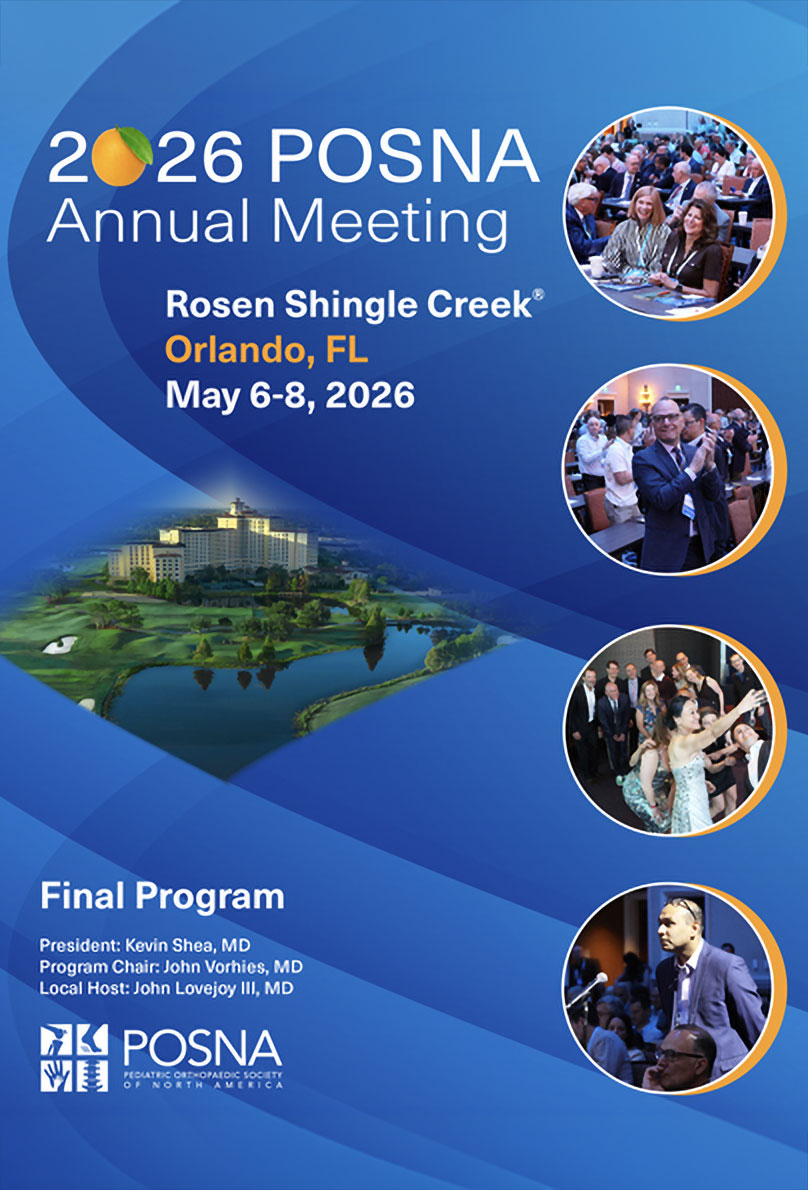
May 6-8, 2026 | The 2026 POSNA Annual Meeting took place in Orlando, Florida. This year, the meeting featured even more high-quality scientific research presented at the podium. The concurrent scientific sessions were expanded to ensure that the best research in the field was shared and discussed by as many members as possible. The primary goals of the POSNA Annual Meeting are both sharing and discussion of high-quality research.
Building on the success of the 2025 fireside chats and roundtable discussions, the meeting featured these engaging sessions once again. They facilitated conversations between pediatric orthopaedic surgeons from a wide range of practices. The program reflected the breadth, quality, and collegial spirit of this specialty.
Course Objectives
Upon completion of the POSNA Annual Meeting, you should be able to:
- Analyze the latest advances in pediatric orthopaedic management to inform clinical decision-making
- Incorporate best practice guidelines to optimize musculoskeletal health for pediatric patients.
- Identify and implement strategies to increase quality, safety, and value to patient care.
Dr. Vitale gave the following talks and participated in the following podcast:
-
Be Careful What You Ask For: Few Patients Meet Mean Arterial Pressure (MAP) Goals After Intraoperative Neuromonitoring (IONM) Changes During Pediatric Scoliosis Surgery
Michaela O’Connor; Michael Brown; Mehdi Elfilali; Alexander Park; Joshua Choi; Josephine Coury; Benjamin Roye, MD; Michael Vitale, MD, MPH—New York-Presbyterian/Columbia University Irving Medical Center, New York, NY, United States -
Securing Support at the Specialty Society Level —Michael Vitale, MD
-
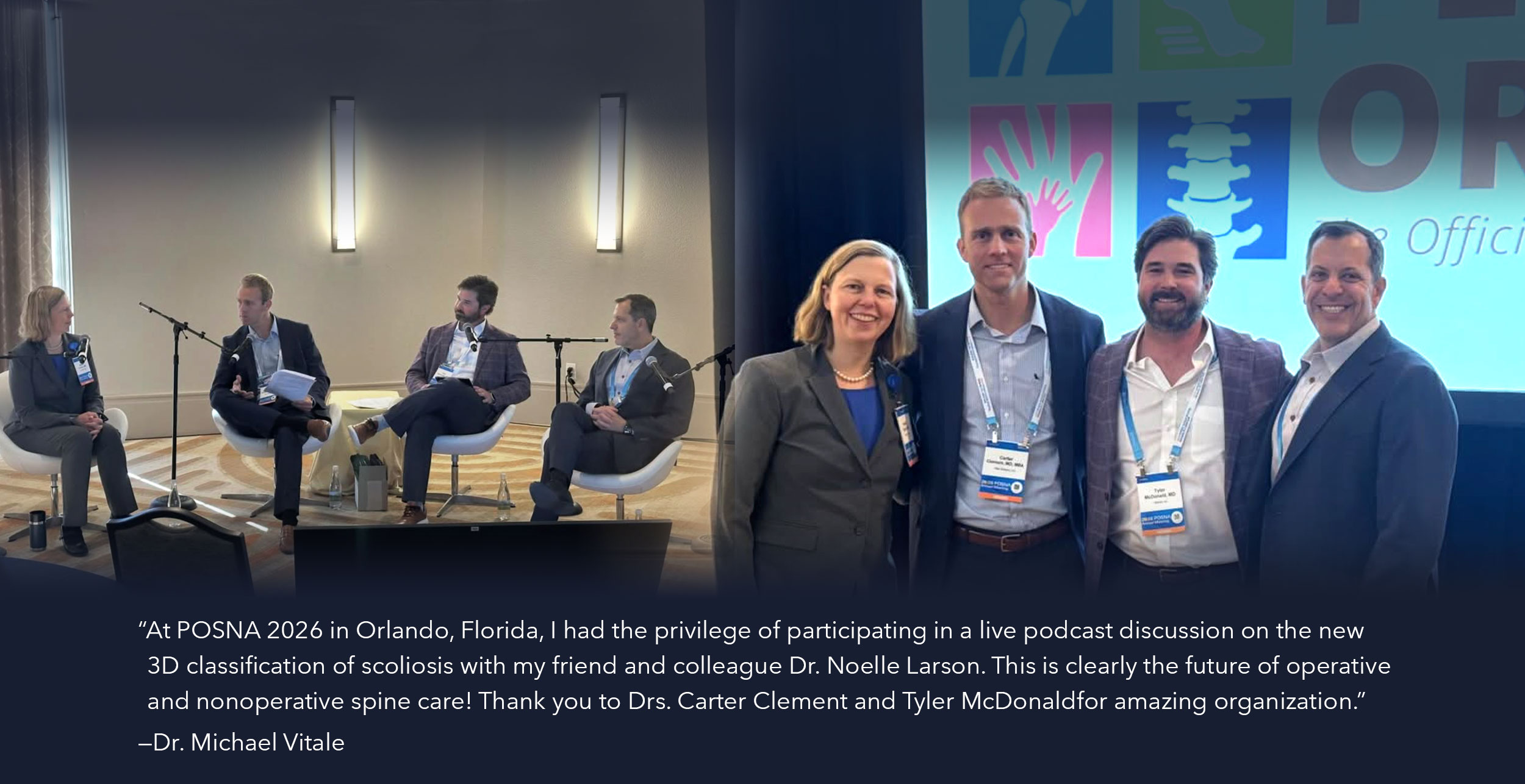
PEDS ORTHO PODCAST: LIVE FROM POSNA—A Conversation About the SRS-Lenke-Aubin 3D Classification
New at the 2026 POSNA Annual Meeting! A live podcast recording from the 2026 POSNA Annual Meeting: participants discussed one of the most significant shifts in deformity analysis in years. Peds Ortho Podcast hosts Tyler C. McDonald, MD, FAAOS, and R. Carter Clement, MD, MBA, discussed the classification with A. Noelle Larson, MD, and Michael Vitale, MD, co-authors of the article, The SRS-Lenke-Aubin 3D classification of adolescent idiopathic scoliosis. - Funding & Aggregation Models: Determine how to fund QI databases and aggregate resources across hospitals and industry partners
—Michael Vitale, MD - Machine Learning (ML) in Intraoperative Neuromonitoring: Updated Model Integrating Hemodynamic Data Detects Changes 35 Minutes Earlier Than Clinical Teams
Varun Arvind; Mehdi Elfilali; Madeline Monness; Erik Williams; Miles Bomback; Alexander Park; Michael Brown; Omar Taha; Matthew Weintraub; Teeda Pinyavat; Anil Mendiratta; Michael Vitale, MD, MPH—New York-Presbyterian/Columbia University Irving Medical Center, New York, NY, United States - Does Turning Rods Change Patient Outcomes? Comparing Achieved Lengthening and Complication Rates Between Magnetically Controlled Growing Rod Orientations
Simon Blanchard; Thomas Coleman; Lorena Floccari, MD; Joshua Pahys, MD; Jacob Jordan; Sulagna Sarkar; John Stelzer, MD; Paul Sponseller, MD, MBA; Tenner Guillaume, MD; Michael Vitale, MD, MPH; Peter Sturm, MD; John “Jack” Flynn, MD; Jason Anari, MD; Patrick John Cahill, MD; Pediatric Spine Study Group, Children’s Hospital of Philadelphia, Philadelphia, PA, United States
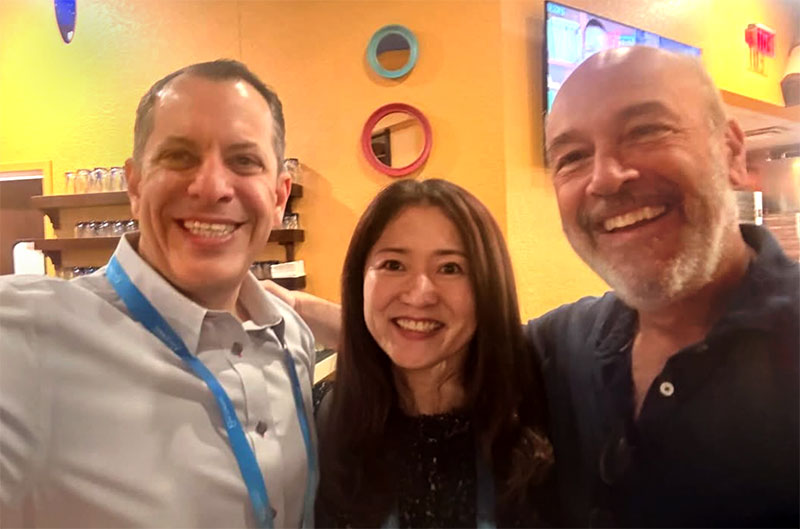
“Honored to present our latest machine learning model for intraoperative neuromonitoring (IONM) at the POSNA awards paper session.
Also featured in the session was Dr. Hyman’s outstanding work on the basic science of muscle contracture. To round out the trifecta, Columbia research alumna Hiroko Matsumoto presented an excellent paper on SMA as well.
Proud to see such strong representation and thoughtful research across the field.”
—Michael Vitale, MD, MPH