April 2–5, 2025 | The International Meeting on Advanced Spine Techniques (IMAST) in Glasgow, Scotland is where leading spine surgeons, innovative researchers, and the most advanced spine technologies come together in an international forum to demonstrate and discuss recent advances in spine surgery. IMAST focuses on innovative and new methods/techniques for spinal pathology. Educational content includes instructional course lectures, four-minute paper presentations, case discussions, E-Point Presentations, and industry workshops, all lead by a multidisciplinary and international faculty.
Course Objectives
Upon completion of IMAST, you should be able to:
- Assess indicators for integrating innovative technologies, such as artificial intelligence, machine learning, predictive analytics, and wearable devices, into current operative spine care practices, and evaluate the limitations of current technology.
- Discuss current best-practices for complication avoidance by utilizing innovative technology in adult spinal deformity surgery.
- Analyze the indications and limitations for minimally invasive and motion-preservation surgical options, including endoscopic and MIS fusion techniques, in Adult Spinal Deformity and Adolescent Idiopathic Scoliosis.
- Improve the knowledge of operative and non-operative standard of care for early-onset scoliosis and congenital spine pathologies.
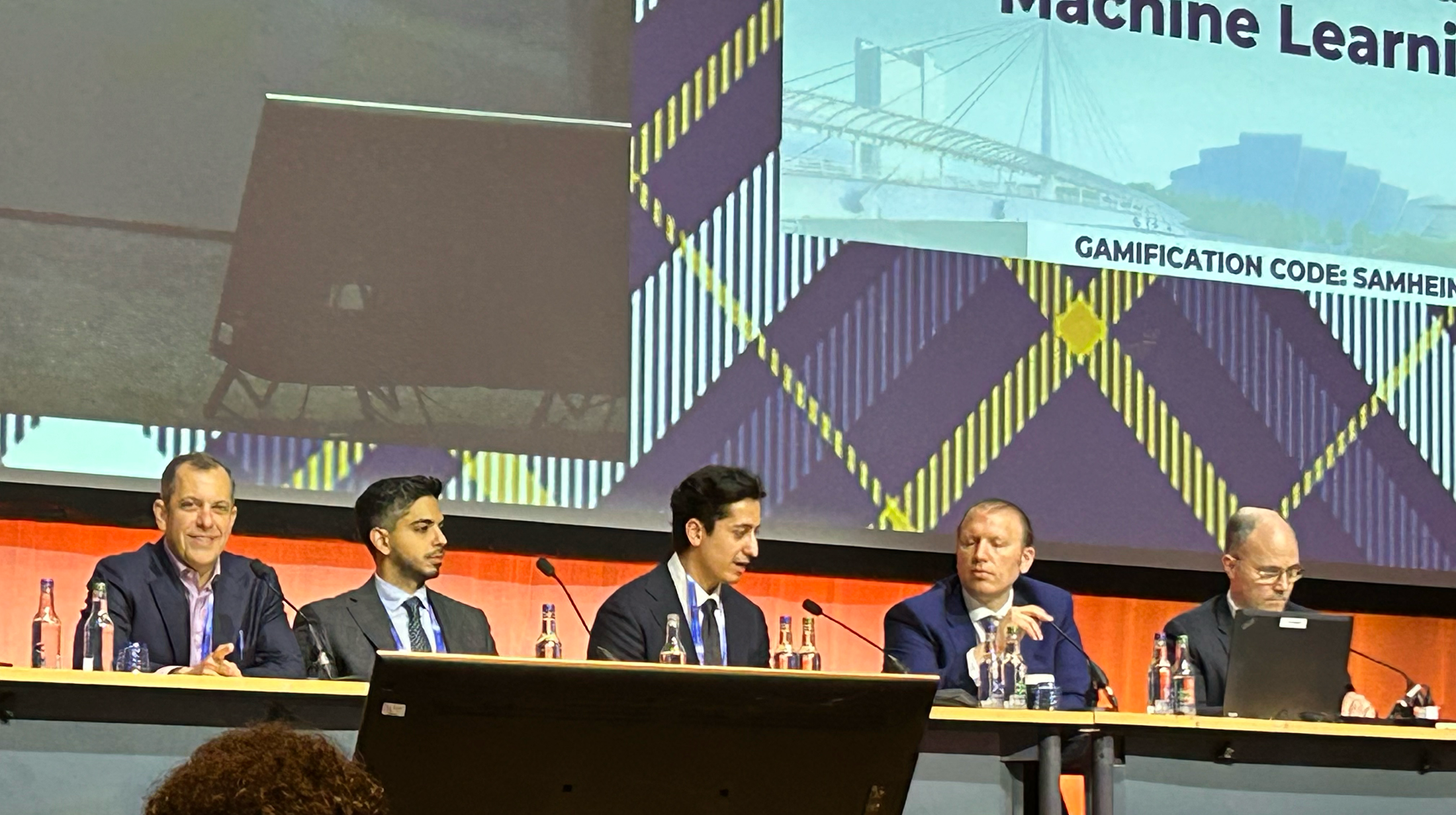
Dr. Vitale gave the following talks and/or participated in the following abstracts:
-
Paper #36: Development of a Machine Learning Tool to Improve Intraoperative Neurophysiological Monitoring: Proof of Concept
Varun Arvind, MD, PhD; Omar Taha, BS; Matthew Weintraub, BSE; Anil Mendiratta, MD; Michael G. Vitale, MD, MPH -
125. Rod Fracture After MCGR is Related to Rod Diameter but Lower Than TGR
Matthew Weintraub, BSE; Omar Taha, BS; Ritt Givens, BS; Matan Malka, BA; Kevin Lu, MA; Paul D. Sponseller, MD, MBA; Peter F. Sturm, MD; John B. Emans, MD; Francisco Javier S. Perez-Grueso, MD; Michael G. Vitale, MD, MPH; Benjamin D. Roye, MD, MPH; Pediatric Spine Study Group -
128. The Unipolar Shilla Technique: Results, Complications, and Outcomes
Omar Taha, BS; Matthew Weintraub, BSE; Thomas Zervos, MD; Ritt Givens, BS; Fthimnir Hassan, MPH; Nicole Bainton, CPNP; Amber S. Mizerik, PA-C; Lawrence G. Lenke, MD; Benjamin D. Roye, MD, MPH; Michael G. Vitale, MD, MPH