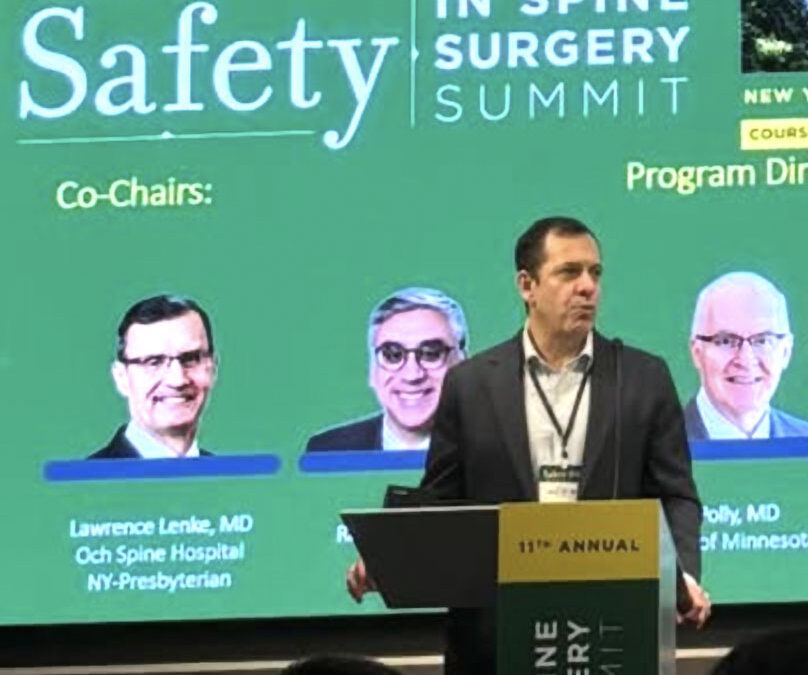
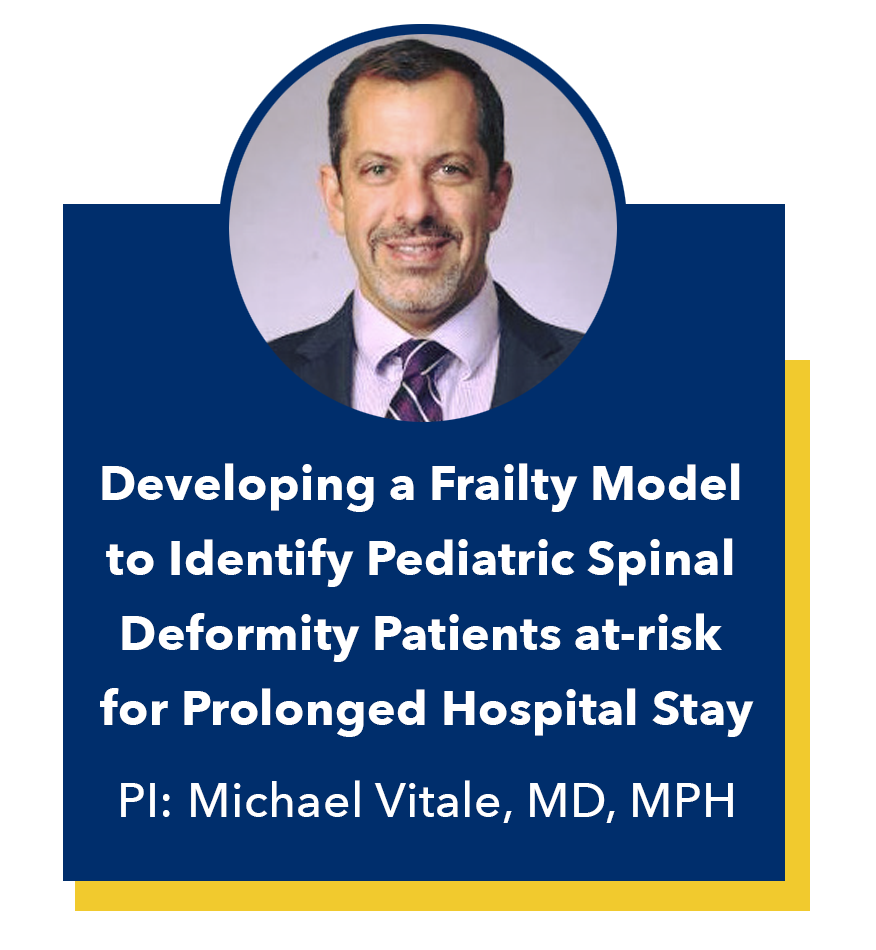
Michael Vitale, MD, MPH is a founding member of Pediatric Spine Foundation and a member of the Board of Directors for the Pediatric Spine Foundation. He is currently the Director of Pediatric Orthopaedics and Chief of the Pediatric Spine Service at the Morgan Stanley Children’s Hospital of New York, while serving as the Ana Lucia Professor of Clinical Orthopaedic Surgery at Columbia University College of Physicians and Surgeons. Read more about Pediatric Spine Foundation below and in the Pediatric Spine Study Group (PSSG) Annual Report 2024.
THE PRESIDENT'S MESSAGE
As we celebrate the progress made in 2024 it is important to bring vitality to the numbers that we hold in such high esteem – 13,400 patients, 56 projects underway, 29 publications, and 96 active sites across 13 different countries around the world. What is the actual impact of all these numbers? Thousands of patients enrolled into our registry is a number worth celebrating, but when we unveil the impact of that number it becomes significantly more meaningful.
—Paul Sponseller, MD, President PSSG
To illustrate this, we must understand that 13,400 patients enrolled in our study registry is not just a data collection number, but represents thousands of individuals whose stories we have followed and learned from to help the future of EOS grow brighter. 56 projects in the works are providing answers to difficult questions that deliver guidance, education and hope for physicians and patients.96 active sites across 13 different countries illustrate the worldwide reach of our membership, providing a community with passionate individuals that are hopeful for what the future might bring. In the end, what these numbers truly represent isthe difference that can be made in one child’s life as a result of the passion, innovation, and collaboration that supports our mission of helping children with spine problems live longer, better lives. As we move forward in this journey together I hope that we can celebrate these milestones but also recognize that our work is not yet complete. Our impact has the potential to shape the future, not just for our organization but for the countless children and families facing early onset scoliosis. I am immensely proud of what we have achieved together and I have no doubt that together we can leave an indelible mark on the lives we touch.
“Our impact has the potential to shape the future,not just for our organization but for the countless children and families facingearly onset scoliosis.”—Paul Sponseller, MD, President
Objective of the Study
The primary goal of this study is to develop a frailty score for patients with EOS using available pre-operative risk factors and intra-operative variables using machine learning. Their site has obtained IRB approval and developed a machine learning (ML) risk model that uses gradient boosting algorithms to predict the likelihood of frailty in individuals based on health and demographic factors such as age, BMI, comorbidities, mobility scores, and nutritional status.
Our Impact: Assessing the Long-Term Impact of VEPTR
Dr. Norman Ramirez-Lluch and his patient, Gabriela Rivera
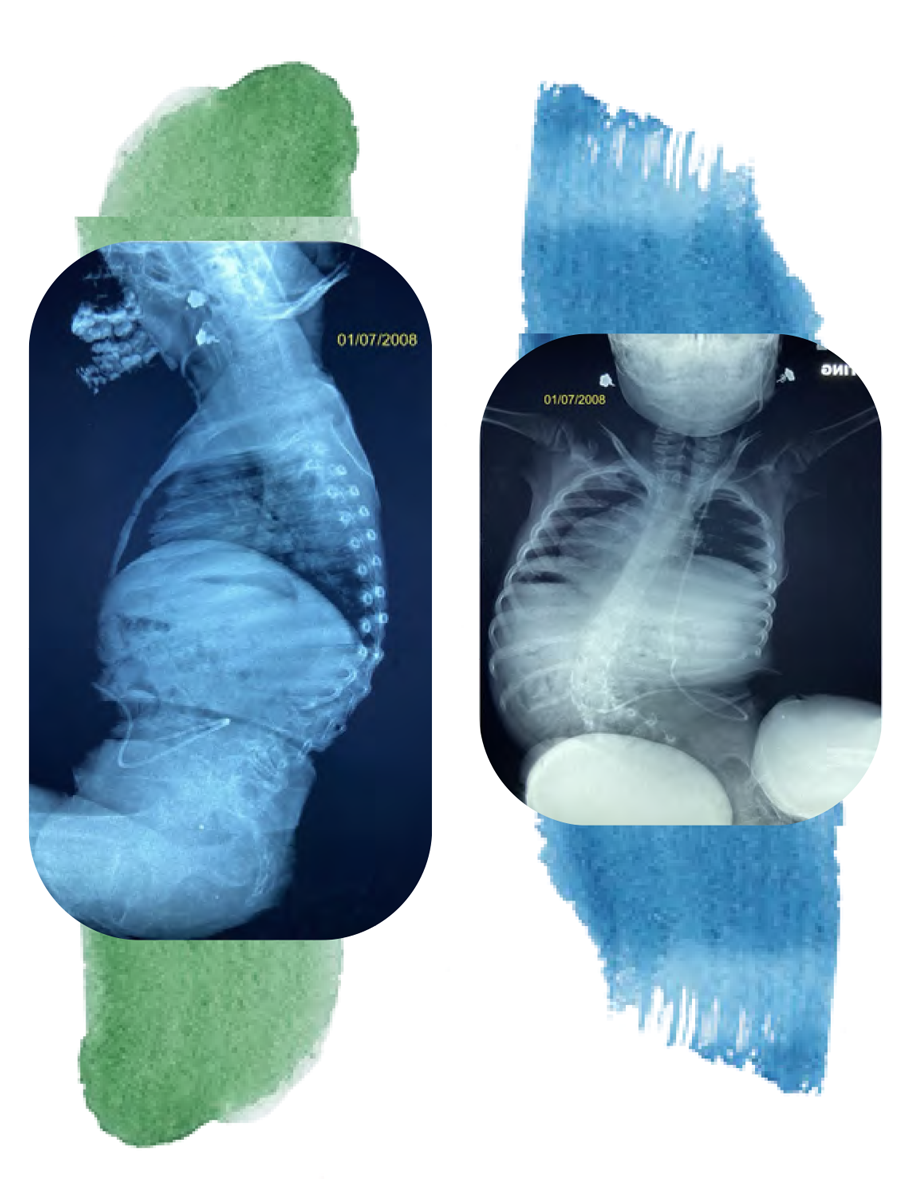
TIn 1989, an innovative project at CHRISTUS Santa Rosa Children’s Hospital in SanAntonio, Texas, introduced the Vertical Expandable Prosthetic Titanium Rib(VEPTR) device, designed to correct coronal deformities and stimulate thoracic spine growth while mitigating respiratory dysfunction. Its technique requires frequent expansion and lengthening procedures to correlate with average spinal growth. The standard practice for rib-based growth instrumentation was to lengthen every six months until patients reached sufficient maturity to undergo final fusion or to stop lengthening. The goal was to offer early onset scoliosis(EOS) patients a treatment that would enhance lung development by increasing thoracic space. However, the use of VEPTR implants has seen a significant decline as alternative surgical options emerge.
In this study, Dr. Norman Ramirez-Lluch and his team analyzed 447 patients from the Pediatric Spine Study Group (PSSG) registry, all treated with VEPTR surgery.The patients were followed for a minimum of five years, and the outcomes measured included spine growth, coronal correction, pulmonary function, complication rates, and health-related quality of life (HRQoL). This study presents Assessing the Long-Term Impact of VEPTR the most extensive sample of VEPTR utilization in the EOS literature, with a minimum of five years of follow-up. Although it fell short of preserving pulmonary function, the study revealed VEPTR successfully improved spine growth and most importantly coronal correction. (Read more in the PSSG Annual Report.)